By Amos, Dermatology Nurse Practitioner at YourSkin MK and Dermatology Clinical Lead at a West London NHS Trust.
Quick answer: To check a mole for skin cancer, use the ABCDE approach, which states to look at Asymmetry, Border irregularity, Colour variation, Diameter over 6mm, and anything Evolving or changing. If a mole ticks more than one of those boxes, or just looks different from your other moles, get it looked at by a clinician rather than waiting to see what happens.
In this blog, we’ll discuss:
- Why is Checking Moles for Cancer Important?
- The ABCDE Method
- What a Professional Check Adds
- The Numbers
- FAQs
How To Check Moles For Cancer? ABCDE Method to Detect Melanoma
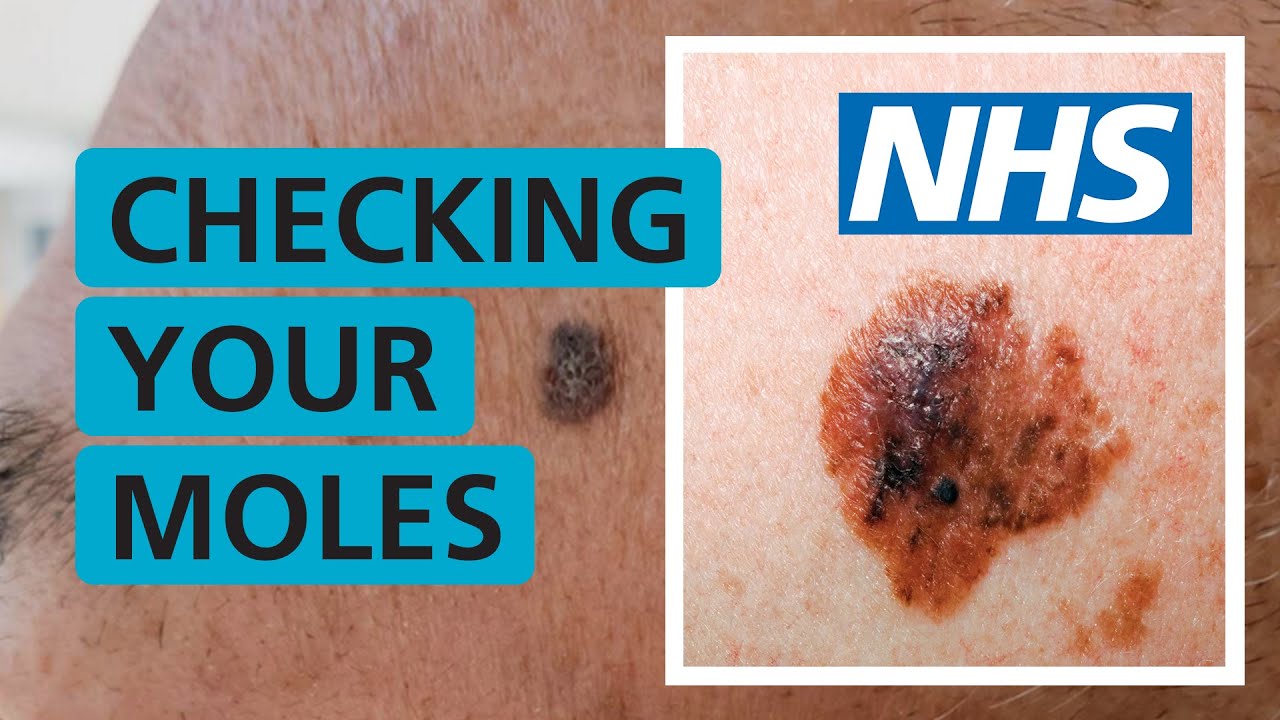
This video is the property of NHS England and has been posted for educational purposes only.
When it comes to checking a mole for skin cancer, the ABCDE method is a highly recognised and effective tool. Here’s what it shows:
Asymmetry: Draw an imaginary line through the middle of the mole. A normal mole is roughly symmetrical; both halves look similar. Melanomas tend not to be.
Border: Healthy moles usually have a smooth, well-defined edge. Watch for ragged, notched, or blurry borders instead.
Colour: One shade of brown is typical for a benign mole. Multiple colours in a single mole, patches of black, red, white, or blue- that’s worth a second look.
Diameter. Roughly 6mm is the benchmark most guidance uses, about the size of a pencil eraser, though smaller melanomas do happen, so this one’s more of a flag than a rule.
Evolving. Any change at all, in size, shape, colour, texture, or a mole that starts itching, bleeding, or crusting.
A few extra things worth knowing that don’t fit neatly into the acronym:
- New moles appearing after childhood or your twenties deserve a look, especially if they seem to appear from nowhere
- The “ugly duckling” sign matters too; if one mole looks noticeably different from all your others, that’s a reason to check it even if it doesn’t tick every ABCDE box
- Melanoma can occur in places you wouldn’t expect, under nails, on the soles of the feet, even in the eye, though these are far less common
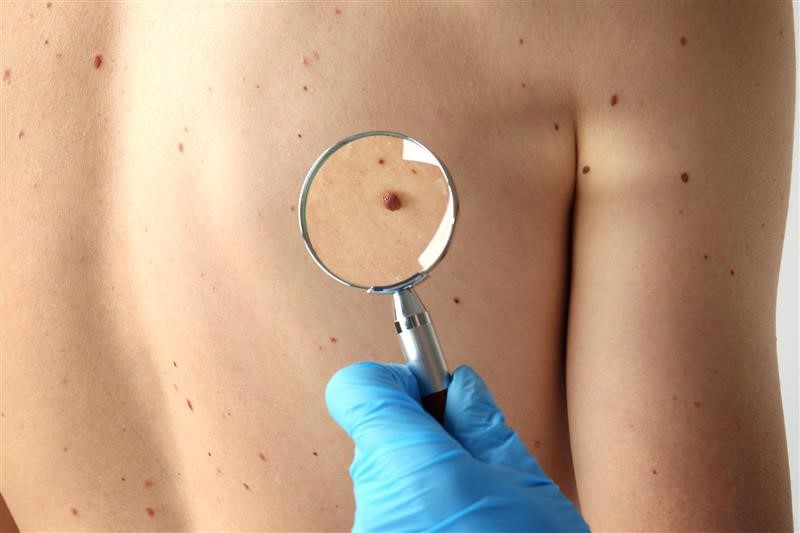
Do the check somewhere with good light, ideally using a full-length mirror and a hand mirror to check spots you can’t see directly.
Why a Home Check For Moles Isn’t The Full Picture
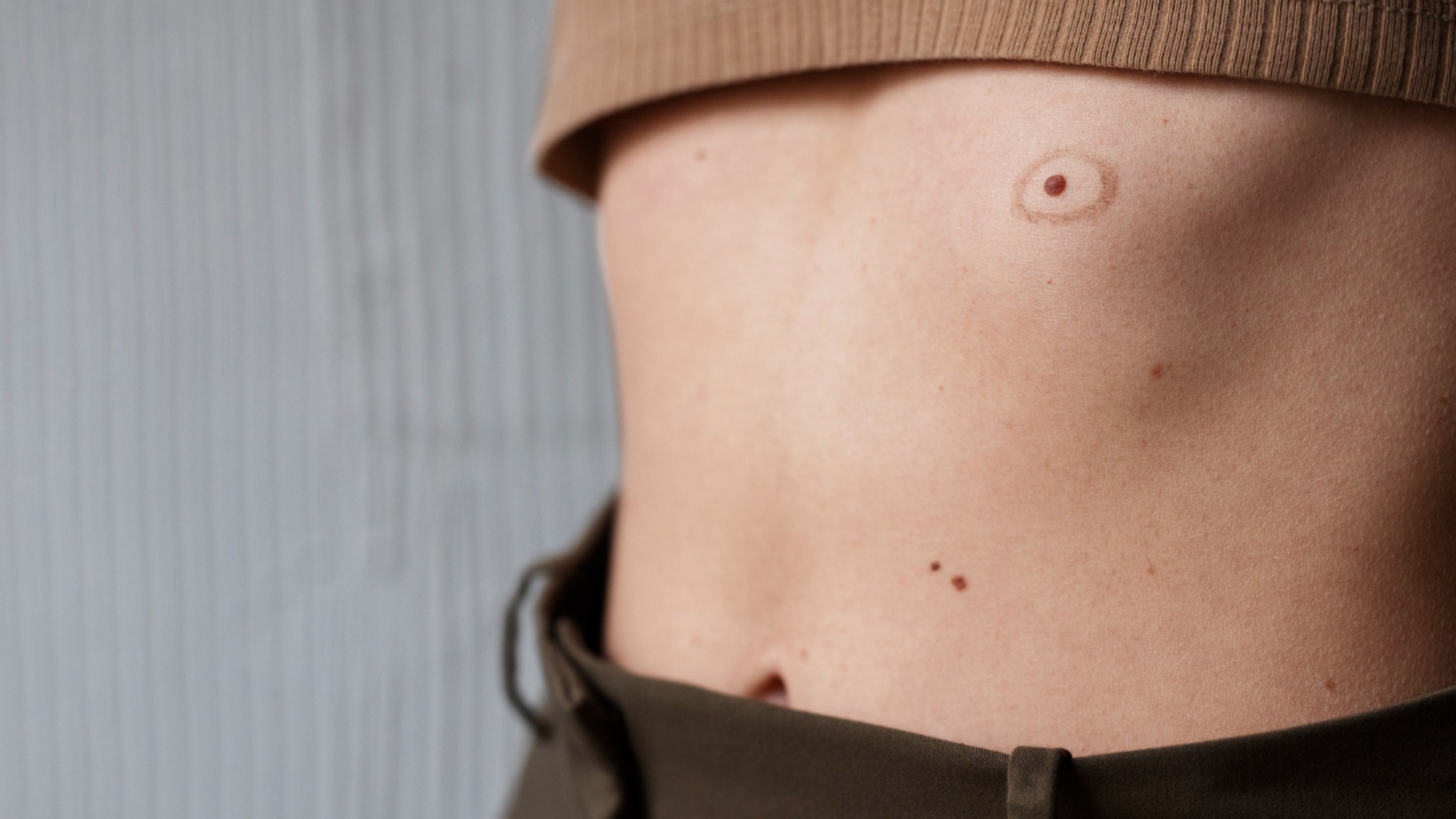
I want to be straightforward about this part. The ABCDE method is a genuinely useful screening tool, but it was never designed to replace a clinical assessment, and it misses things.
Some melanomas don’t follow the ABCDE pattern at all, particularly nodular melanoma, which tends to grow faster and doesn’t always show the classic asymmetry or colour variation people are told to watch for.
That’s one of the reasons dermatologists use dermatoscopy, a handheld, magnified light tool, to examine moles more closely than the naked eye can. It picks up structural detail in the pigment pattern that just isn’t visible from across a bathroom.
At YourSkin MK, our full body skin check works from that same principle: a systematic, head-to-toe review rather than a quick look at the one mole you’re worried about.
All our affiliated clinicians are registered with the GMC, the NMC, or the Royal College of Nursing, and most hold permanent NHS positions alongside their private practice, so the same clinical standards apply throughout.
The Numbers on Skin Cancer Through Moles in the UK
Melanoma gets talked about a lot online, not always accurately. Here’s what’s actually documented.
| Statistic | Detail | Source |
| Annual cases | Around 19,400 new melanoma cases are diagnosed in the UK each year, roughly 53 a day | Cancer Research UK |
| Rising incidence | Melanoma rates have increased by around 164% in the UK since the early 1990s, and by about 26% in the last decade alone | Cancer Research UK |
| Survival
Prevention |
92 % of people (9 in 10) diagnosed with melanoma in the UK are predicted to survive at least 10 years.
86% of melanomas in the UK are estimated to be preventable, largely through reduced UV exposure. |
Melanoma UK
|
The prevention stat is literally worth paying attention to, showing that we can prevent the deadliest problem simply by making simple lifestyle changes.
Bottom Line: What After You’ve Checked a Mole For Skin Cancer?
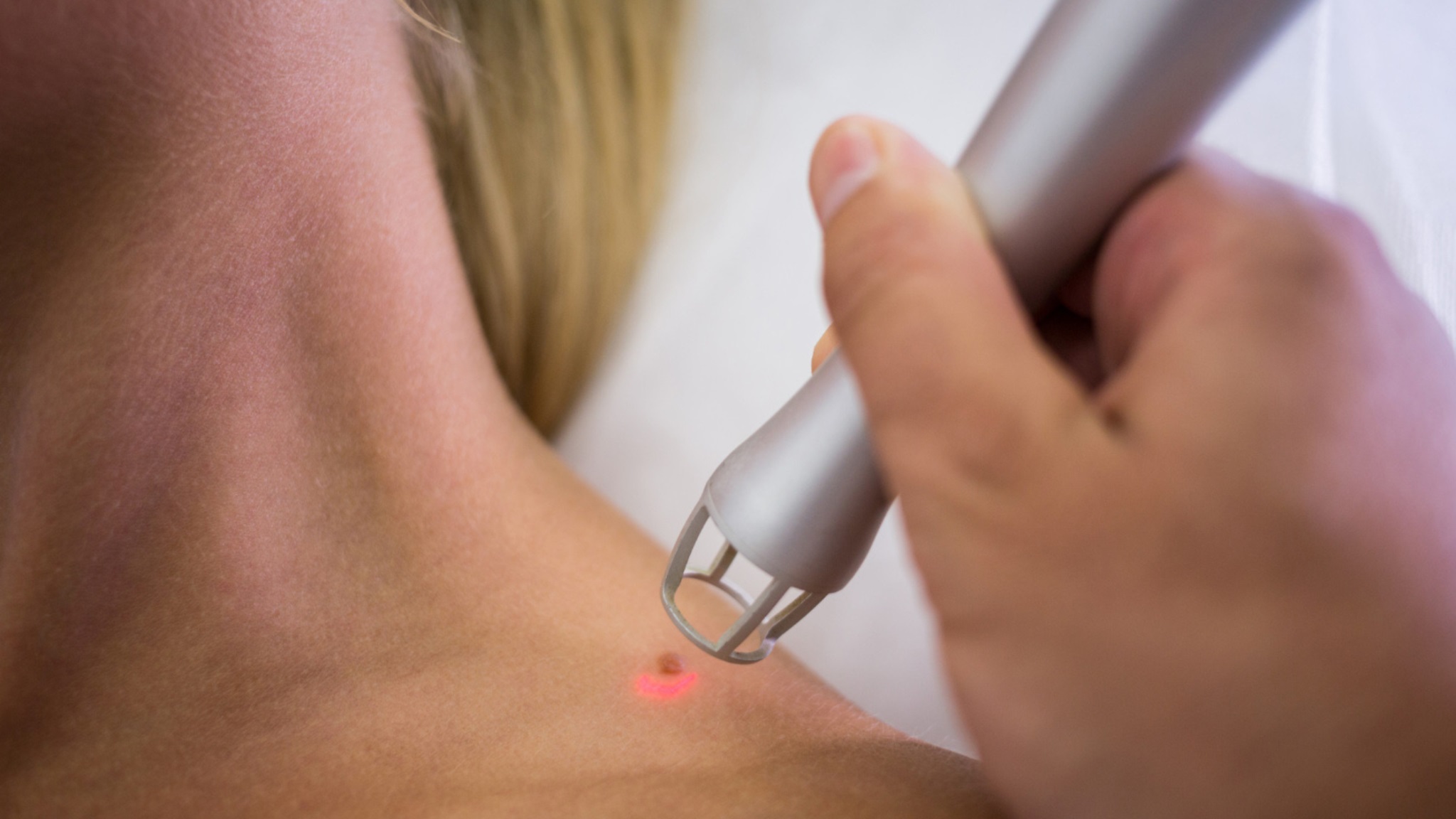
Checking moles for skin cancer isn’t complicated once you know the ABCDE framework, but it can’t ascertain the underlying problem. If you’ve noticed a mole that’s changed, or you’re due a routine check and you’re searching for mole removal or a proper skin treatment which only a clinic can offer, that’s exactly the gap a professional assessment fills.
YourSkin MK is a Milton Keynes dermatology clinic staffed by GMC- and NMC-registered clinicians, several of whom hold NHS positions alongside their clinic work, and our full body skin check is built around the same clinical standards you’d expect in a hospital setting.
So, if you’re looking for mole removal in Milton Keynes or proper skin treatment in Milton Keynes, book a full body skin check or mole assessment with YourSkin MK and get a proper answer instead of a guess.
Get in touch with us to check a mole for skin cancer!
FAQs
How often should I check my moles for skin cancer?
Roughly once a month is the general guidance, done somewhere well-lit with a mirror for hard-to-see areas like your back and scalp. The goal is familiarity with your own skin, so change stands out faster.
What does a cancerous mole look like compared to a normal one?
Normal moles are usually one colour, symmetrical, and have a clean edge. A concerning mole tends to break at least one of those patterns: uneven colour, ragged border, or asymmetry, sometimes alongside itching, bleeding, or crusting.
Can a mole be cancerous without matching the ABCDE signs?
Yes, and this trips up a lot of people. Some melanomas, particularly the nodular type, grow quickly without showing classic asymmetry or colour changes. If a mole simply looks different from your others, get it checked regardless of whether it fits the acronym.
Is mole mapping worth it if I have a lot of moles?
For people with many moles, or a family history of melanoma, mole mapping can be genuinely useful. It photographs and tracks moles over time, so small changes get flagged rather than missed.
How much does mole removal cost privately?
Pricing depends on the method used; cryotherapy or shave excision are the two most common approaches, and on the size and location of the mole. It’s worth getting a direct quote after an in-person or photo-based assessment rather than relying on a generic figure.
About the Author
Amos is a Dermatology Nurse Practitioner at YourSkin MK, with clinical experience across surgical treatments, biologics, systemic treatments, lesion clinics, and mole mapping. He specialises in diagnosing and treating skin conditions including skin cancer, and combines his private practice with his role as Dermatology Clinical Lead within a busy West London NHS Trust. All clinicians affiliated with YourSkin MK are registered with the GMC, the NMC, or the Royal College of Nursing.
This article is for general information only and does not replace a professional medical assessment. If you’re concerned about a mole, please contact your GP or a qualified dermatology clinic.